Saturday, May 19, 2018

The Voynich manuscript

Hello writers and readers,

Today I would like to let you know about Voynich manuscript, It is a mysterious book that I discover just a while ago, This book is written in an unknown script, and that fascinates me a lot.

But let's explain something more about it.

The Voynich manuscript is an illustrated codex hand-written in an unknown writing system. The book has been carbon-dated to the early 15th century (1404–1438), and it may have been composed in Northern Italy during the Italian Renaissance. The manuscript is named after Wilfrid Voynich, a Polish book dealer who purchased it in 1912.


Some of the pages are missing, only around 240 remaining. The text is written from left to right, and most of the pages have illustrations or diagrams.


The Voynich manuscript has been studied by many professional and amateur cryptographers, including American and British codebreakers from both World War I and World War II.
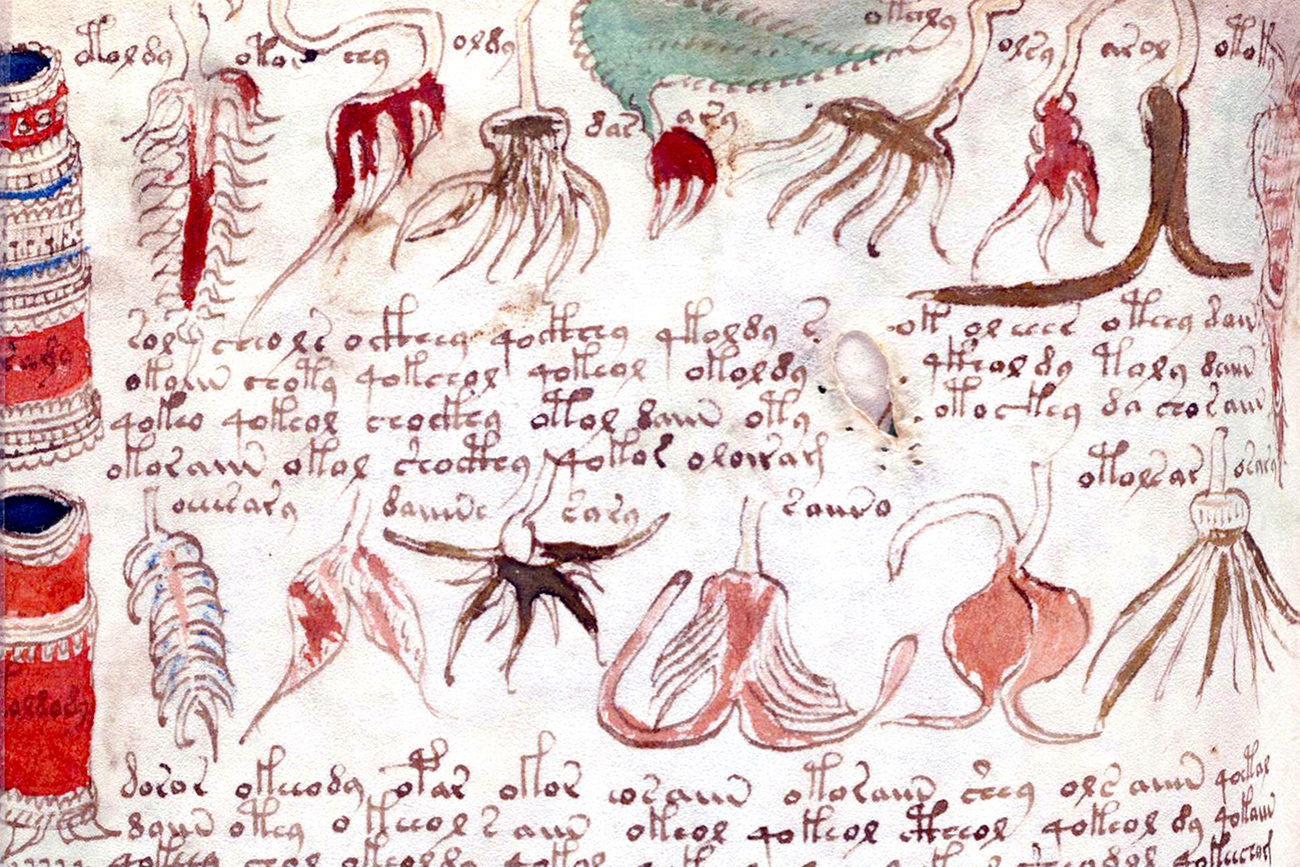


No one has yet demonstrably deciphered the text, and it has become a famous case in the history of cryptography. The mystery of the meaning and origin of the manuscript has excited the popular imagination, making the manuscript the subject of novels and speculation. None of the many hypotheses proposed over the last hundred years has yet been independently verified.


Over the unknown script the amazing thing is that the manuscript has a lot illustrations and there are six sections: Astronomical, Pharmaceutical, Biological, Herbal, Recipes, Cosmological.


On this sections there are lot of diagrams, plants draws, and  many of the female draws are partly naked.


The overall impression given by the manuscript is that it was meant to serve as a medicine book to address topics in medieval era. But there is also somebody that thinks there is also a connection to alchemy. However in all this years there was lot of theories and considerations about it.

#mysterious #book #herbs #astronomical #voynich #manuscript #medieval #age #biological #cosmological  #magic #pharmaceutical #alchemy #saturdaymotivation #fantasy #mystery #amwriting #writerslife #author #marcomarek #saturday #positivevibes #love #amazing #books


Monday, May 14, 2018

Top 10 places to visit of Prague

Hello writers and readers,

Since my new work in progress (wip) is based in Prague I would like to list my top 10 places to visit, Prague have some of the most picturesque architectural landmarks in Europe, and this are my favorites! What are yours?

Magic Streets : Prague bound, it's the title for now.

Blurb

Jack one American  photographer, living in England  went in Prague for a work,  he rent an apartment in a building that was an ex hotel, the landlord is a clairvoyant, tarot reader  that she involves him  in her battle to eliminate some half monsters  generated by a meteor in 17th century. Plus he found a magic street that teleport him in another place when he thinks of it. He will be back home very changed, and are all this adventures happened shocked him?  


1 Old Town Square (Staromestské námestí) 


Old Town Square is a popular spot in Prague, with travelers flocking here in droves for its beautiful architecture, colorful history and vibrant atmosphere. The square hasn't changed much since it was established in the 12th century when it functioned as the city's original marketplace.  The Old Town Square area is accessible from the Staromestská metro stop.


2 Charles Bridge (Karluv most) 

The Charles Bridge connects Old Town (Staré Mesto) and Lesser Town (Malá Strana). Visitors come here to soak up the atmosphere, buy souvenirs and to take in the 30 saint statues that line the bridge. Dating back to 1357, the statues were crafted between 1683 to 1928 to honor numerous saints. Staromestská metro stop and short walk to get there. 


3 Prague Castle Pražský Hrad


The Prague Castle has stood in this spot for more than a thousand years and covers a lot of area. A Unesco World Heritage site, he grounds include St. Vitus Cathedral, the Royal Palace, St. George's Basilica and the Golden Lane – where homes have been converted into period scenes to show how artisans lived and worked in ancient times. Prague Castle is accessible by subway from the Hradcany station or you can take Tram 22 to the Pražský Hrad stop. 


4 Old Town Hall with Astronomical Clock (Staroměstská radnice s orlojem)


Located in the Old Town Square, the Prague Astronomical Clock has been around since the 15th century, though it has required repairs many times over its history.
This clock doesn't display the time of day. Rather, it's meant to be used to determine the phases of the moon and the equinoxes. The clock uses depictions of symbols, such as a money bag representing greed, a mirror to represent vanity and a skeleton to depict death. Each hour the clock shows a visualization of time unlike anything else in the world.   The Old Town Square area is accessible from the Staromestská metro stop.


5  St. Vitus Cathedral (Chrám svatého Víta)    

  
St. Vitus Cathedral  is a Gothic masterpiece, and the spiritual symbol of the Czech state. The cathedral was commissioned by Charles IV. Construction began in 1344. One of the most beautiful gothic cathedral I have seen. You can get there with  Tram 22 to the Pražský Hrad stop  or with subway Hradcany station. 


6 Golden lane (Zlata Ulicka)


The Golden Lane  in the complex of Prague Castle. The street full of small houses built in Mannerism style at the end of the 16th century.Golden Lane got its name from the story of alchymists living in the street during the reign of Rudolf II who tried to make not only the philosopher stone or the elixir of youth, but also to transform metals into gold. To get there  you can take subway at Hradcany or Tram 22 at Pražský Hrad stop.


7  Dancing building  (Tančící dům)


The Dancing House  or Fred and Ginger, is the nickname given to the Nationale-Nederlanden building on the Rašínovo nábřeží (Rašín Embankment) in Prague. The very non-traditional design was controversial at the time because the house stands out among the Baroque, Gothic and Art Nouveau buildings for which Prague is famous and in the opinion of some it does not accord well with these architectural styles. Karlovo Namesti metro stop.


8  Powder Tower (Prašná brána)

This monumental entrance by which the coronation processions of Czech kings entered the Old Town is one of the most significant monuments of Late Gothic Prague. Completed in 1475, the Powder Tower, which formerly served as a gunpowder store, is still the starting point for the Coronation or Royal Route to Prague Castle. The viewing gallery is located at a height of 44 m. Namesti Republicky is the metro to get there,


9 Church of Our Lady before Týn (Chrám Matky Boží před Týnem) 


One of the most impressive Gothic religious buildings in Prague, it was built from the mid-14th to the early 16th centuries. At the end of the 17th century, the interior was reworked in Baroque style. The cathedral serves as an extensive gallery of Gothic, Renaissance and Early Baroque works, the most interesting of which include altar paintings by Karel Škréta and the tomb of the astronomer Tycho Brahe. The organ, dating from 1673, is the oldest in Prague. You can get there with Staromestská metro stop.


10  Clementinum (Klementinum) 


The extensive grounds of the Clementinum, one of the largest building complexes in Europe, were built from the mid-16th century to the mid-18th century, originally as a Jesuit dormitory. In its Astronomical Tower, meteorological measurements have been collected since 1775. The most beautiful hall of the complex is the Baroque Library with beautiful frescoes and historically valuable globes. The Mirror Chapel with its richly designed interior and unique installation of mirrors is a place where classical music concerts take place regularly. Also here taking metro Staromestská you can get there.


#prague #praha #magic #city #historical #tyn #cathedral #castle #astronomical #clock #charlesbridge #goldenlane  #wip #new  #book #saturday #writerslife #author #marcomarek #magicstreets  #mondaymotivation #picoftheday #bookstagram #amwriting #fantasy #witches #spells #love #amazing  #books #writer #iartg #Ian1 #ASMSG #monday


Tuesday, March 27, 2018

New book release Heshayol by Joshua Robertson !

Hello writers and readers ! 

I'm pleased to let you know a new book release! 

Joshua Robertson's  new book !  Heshayol 


Heshayol The Blood of Dragons Book 2

Over a millennium ago, at their father's command, Tyran and Drast sent the Horned God to the Netherworld in hopes of gaining everlasting life. Instead, they sparked a chain of events that led to the near destruction of the Ash Tree and the liberation of the old gods. Now, with the world waning, the two brothers are freed from Anaerfell to travel to the frozen realm of the dead and resurrect their enemy with hopes of restoring balance. Tyran and Drast journey between time and space with limitless magic at their fingertips to face demon legions, forsaken immortals, and the realization that the malevolence of their father is not yet done.

Heshayol is available from March 5th so grab your pre order for only $2.99 and for a limited time you can get the first book Anaerfell for only $.99.


Joshua Robertson is an award-winning author in epic, dark fantasy. You may recognize him as the dude whose dragons were said to destroy George R.R. Martin's and Christopher Paolini's dragons in a very biased Twitter poll. His first novel, Melkorka, was released in 2015, and he has been writing fantasy fiction like clockwork ever since. Known most for his Thrice Nine Legends Saga, Robertson enjoys an ever-expanding and extremely loyal following of readers. He currently lives in North Carolina with his better half and his horde of goblins.


J.C. Boyd lives in the Midwest with his wife and two dogs. He recently earned his MA in English Literature and is working on his debut novel for his own fantasy world. Despite growing up with Dungeons & Dragons, Lord of the Rings, and a collection of both Dragonlance and Forgotten Realms novels, J.C. has an abiding love of classics and spends his free time reading anything he can get his hands on.


#new #release #Thriceninelegends #tnlbooks #writersofinstagram #book #writer #dragons #epicfantasy #books #litchat  #writingcommunity #amwritingfantasy #iartg #asmsg #darkfantasy #writers #fantasybooks #book #writer #dragons #epicreads #author #joshuarobertson

Monday, March 5, 2018

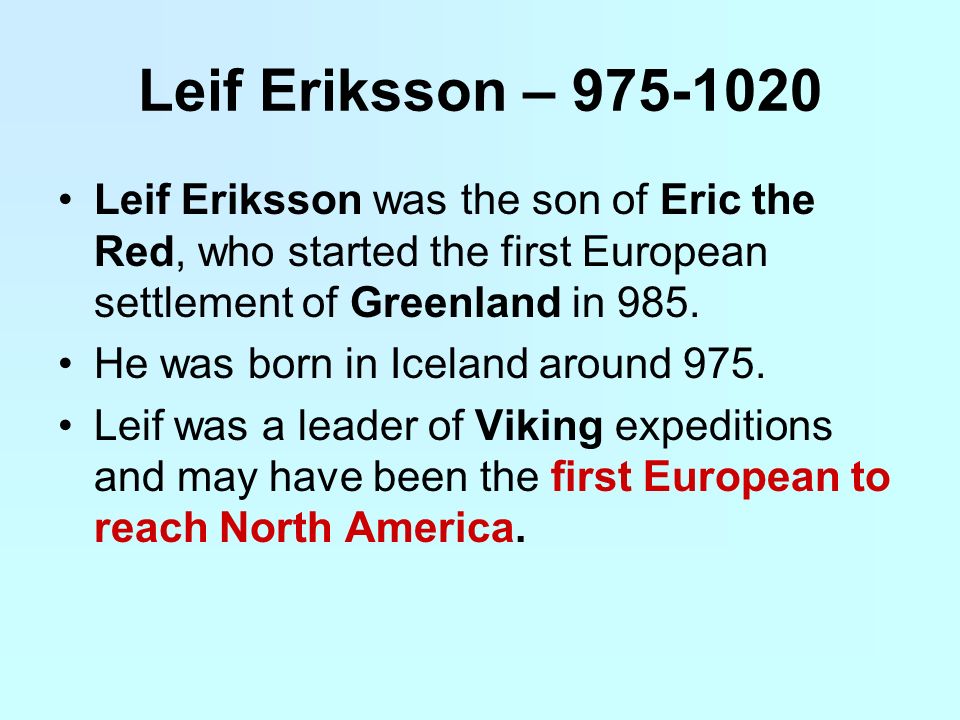
Did the Vikings discovered America?

Vikings warriors set foot in the New World 500 years before Columbus


New evidence has been uncovered that suggests the Vikings may have discovered North America nearly 500 years before Christopher Columbus made his famous journey to the New World.
Scientists claim to have uncovered what they believe to be a Viking settlement on the Canadian island of Newfoundland that appears to have been built between 800AD and 1300AD.


It is only the second known Viking site to be discovered in North America and helps to confirm that they were the first Europeans to reach the New World.
This new site, discovered in an area called Point Rosee in southern Newfoundland, is 400 miles (643km) south west of a Viking settlement found in L'Anse aux Meadows during the 1960s. (see photo below)


Archaeologists said the discovery potentially opens 'a new chapter' in history by showing the Vikings had explored far further into the New World than previously believed possible.
Dr Sarah Parcak, an archaeologist at the University of Alabama, Birmingham, explained: 'This new site could unravel more secrets about the Vikings, whether they were the first Europeans to 'occupy' briefly in North America and reveal that the Vikings dared to explore much further into the New World than we ever thought.
Archaeologists found evidence of stones blackened by iron ore processing (pictured), something that the indigenous North American population were not thought to do. It suggests the buildings that stood at the site were inhabited by Vikings, who made extensive use of iron


During excavations of the site, the team uncovered evidence possible bog iron ore processing.
The settlement at L'Anse aux Meadows was the only other site where pre-Columbian iron processing has been found in North America.


The Vikings are well known to have been adept seafarers, using the sun and the stars to help pick their way across open stretches of ocean away from the coastline.
It is thought the Vikings first discovered America by accident in the autumn of 986AD, according to one historical source, the Saga of the Greenlanders.
It tells how Bjarni Herjolfsson was stumbled across North America after being blown off course as he attempted to sail from Norway to Greenland, but he did not go ashore.
Inspired by his tales, however, another Viking Leif Ericsson then mounted his own expedition and found North America in 1002.
Finding it a fertile land, rich in grapes and berries, he named it Vinland.
Eriksson also named two further 'lands' on the North American coast - one with flat stones, which he called Helluland, and one that was flat and wooded, named Markland.
The discovery of the settlement at Point Rosee now helps to confirm that these legends were in fact true.


VOYAGES OF DISCOVERY 

789AD Vikings begin their attacks on England
840AD Viking settlers found the city of Dublin in Ireland
844AD Vikings raid Seville but are repulsed
860AD Rus Vikings attack Constantinople
866AD York is captured by a Viking army
870AD Vikings colonise Iceland
981AD Erik the Red discovers Greenland
986AD Bjarni Herjolfsson sights North America after being blown off course
1002AD Leif Eriksson, son of Erik the Red, explores the coast of North America, named them Karland, Helluland and Vinland
1492AD Italian explorer Christopher Columbus lands in the New World when he stumbles across the islands now known as The Bahamas 

 By Richard Gray for MailOnline


#vikings  #discover  #north  #america  #travels  #drakkar  #columbus  #leiferiksson #unknown  #history  #middleage  #iron  #masters  #norway  #monday  #expedition #explore  #greenland  #iceland  #new #world  #mysteries

Thursday, March 1, 2018

Nite Fire: Chain Reaction Release !

Hello readers and writers! 

I wanted to let know about a new book release! 


Nite Fire: Chain Reaction (NF Bk#2)

It’s almost here! Chain Reaction, the second book in my urban fantasy series, Nite Fire, will be releasing soon. In the meantime, I’m super excited to share the cover with you. Inspired by a compilation of several scenes within the book, the cover features empathic shapeshifter, Dahlia Nite, in her (mostly) human form. The artwork was created by my amazing cover artist, Alan Dingman. 


Blurb
If anyone can tell the difference between monsters and humans, it’s Dahlia Nite. For nearly a century, she’s hunted one to protect the other; safeguarding humanity from the creatures that slip through the torn veil between the worlds—creatures like her. But the lines are blurring. As people begin mutating and combusting on the streets, Dahlia realizes a strange affliction has descended upon Sentinel City. The mysterious ailment strikes all walks of life, from the posh, high-end nightclub district to the homeless community. Its victims, driven to random acts of savagery, are drawing attention too fast to cover up.
Assigned to the case, Dahlia and her human partner, Detective Alex Creed, investigate the deaths. But all they have is questions and bodies, and a public on the verge of panic. Working behind the scenes with her self-appointed sidekick, Casey Evans, Dahlia struggles to discover what, or who, is behind the alarming transformations. As the violence spreads and the mystery unfolds, she wonders: are the victims still human? Were they ever?
Chain Reaction is the second book in the Nite Fire Series.


Curious about the series?
Read excerpts at clschneiderauthor.com
Check out the trailer for Flash Point (bk#1) https://youtu.be/C041ClBpihI
Catch up with book #1 before book #2 comes out! http://mybook.to/NF1
Chain Reaction will be available for paperback and up for pre-order soon. Subscribe to my newsletter for information on the official release date http://bit.ly/2EgLFfr

 
About the Author
C.L. Schneider is an award-winning independent author of adult epic and urban fantasy. Born in a small Kansas town, she currently resides in New York’s scenic Hudson Valley Region with her husband and two sons. Her published works include the epic trilogy, The Crown of Stones, and Flash Point, the first book in her urban fantasy series, Nite Fire. Book two, Chain Reaction, will be released in early 2018.
Learn more about C.L. Schneider, and the worlds she creates, at clschneiderauthor.com where you can read reviews, excerpts and sneak peeks, join her Street Team, and subscribe to her newsletter. An active part of the indie author online community, you can connect with her on social media, where she is often found chatting about the daily ups and downs of a writer’s life.


Published Works

All titles available in paperback or for Kindle. Read free with Kindle Unlimited.
Nite Fire: Flash Point (Bk 1)
The Crown of Stones: Magic-Price (also available on Audible) 
The Crown of Stones: Magic-Scars
The Crown of Stones: Magic-Borne


Connect  


#new #book #release #epic #urban #fantasy #amreading #author #clschneider #adventure #thriller #nitefire  #indieauthor #writerslife #indiebooks #bookboost #iartg #ian1 #tbt #thursdayreads #weekendreads #love #great #amazing #books

Wednesday, February 28, 2018

Hyperearth's Readers Favorite 5 Stars review!


Hello writers and readers! 

I have great news!  

My book Hyperearth have had a 5 stars review from Readers Favorite ! 


This is the new badge I added on my cover ! That's a great thing that Hyperearth got an (let's say) "award" !  Just for remind it  I enclose a short blurb of Hyperearth.

A castle within the city of Lubena holds a secret: a portal to the alternate world of Hyperearth. Mary and Martina encounter beings that range from the curious to the dangerous. They must save their newfound friends and defeat the evil Sathon. Will they solve the quest and make it out in time? Or will they remain in Hyperearth forever?


The review

Here we go, you can read the whole review here, and I will post the Readers Favorite link too.


Reviewed by Romuald Dzemo for Readers' Favorite

Hyperearth by Marco Marek is a good read, beautifully written for
young adult readers. The story starts with great dialogues and the
reader is immediately introduced to the key characters. We find
them in a castle, a hidden castle in the city of Lubena. But this
castle is, in fact, a portal. Meet Mary and Martina as they are
transported into Hyperearth, an alternate world with different kinds
of creatures. As they discover this strange and exciting place, they
make new friends, but are quickly embroiled with a powerful
enemy, Sathon, bent on destroying their friends. Do they have what
it takes to defeat him and bring back calm to this world?
Marco Marek’s novel will remind readers of worlds like Narnia in a
story that is modeled after the idea of parallel worlds. Readers will
love the protagonists, two young heroes who navigate a world filled
with uncertainty, each step making them bolder. I enjoyed the
beautiful prose, filled with very engaging and plot-driven dialogues.
The dialogues sound very natural and these are a great ingredient
in the development of conflict in this story and in character
development. The story starts slowly, but the pacing increases as
the reader gets into the story. The setting is beautifully imagined,
and it left me with the strange feeling of being in a dream. The
images, including the hidden castle, the snow against the colors of
the wooden buildings, and the landscapes of Hyperearth are vivid.
This is a wonderful fantasy with likable characters, and offers an
adventure that readers will enjoy


Check the links for more info 
 
Links
Review 

 
Amazon 


Barnes and Noble 

 
Website

Facebook


 #love #fantasy #amazing #magic #books #hyperearth #instapic #instagood #instadaily #tbt #like4like #likeforlike #bookstagram #timetravel #epic #indie #authors  #writerslife #amwriting  #author #marcomarek #iartg #ian1 #asmsg #indiebooksbeseen  #indiebooks  #writers #review #readersfavorite


Tuesday, January 16, 2018

Mysterious Void Discovered in Egypt's Great Pyramid

Archaeologists discover mysterious void deep within Great Pyramid of Giza

Muon-detecting sensors have revealed a huge cavity hidden within the pyramid – the first major structural find since the 19th century


Archaeologists have uncovered a mysterious enclosure hidden deep inside the Great Pyramid of Giza, the oldest of the seven wonders of the ancient world.
The massive cavity stretches for at least 30 metres and lies above the grand gallery, an impressive ascending corridor that connects the Queen’s chamber to the King’s in the heart of the historic monument. It is the first major structure found in the pyramid since the 19th century.
It is unclear whether the void is a chamber or a corridor, or whether it played any more than a structural role in the pyramid’s construction – such as relieving weight on the grand gallery below. But measurements show that it has similar dimensions to the grand gallery, which is nearly 50 metres long, eight metres high and more than a metre wide.

Pyramid graphic
Scientists discovered the void using sensors that detect particles known as muons, which rain down on Earth when cosmic rays slam into atoms in the upper atmosphere. The muons travel at close to the speed of light and behave much like x-rays when they meet objects. Armed with suitable equipment, researchers can used them to reveal the rough internal structure of pyramids and other ancient monuments. “We know that this big void has the same characteristics as the grand gallery,” said Mehdi Tayoubi at the HIP Institute in Paris, a non-profit organisation that draws on new technology to study and preserve cultural heritage. “It’s really impressive.”

 Also known as Khufu’s Pyramid, or the Pyramid of Cheops, the Great Pyramid was built in the 4th dynasty by the pharaoh Khufu, who reigned from 2509 to 2483 BC. The monument rises 140 metres above the Giza Plateau and has three chambers known from previous explorations: a subterranean one at the base of the pyramid, the Queen’s chamber at the centre, and the King’s chamber above. While a granite sarcophagus sits in the King’s chamber, King Khufu’s mummy is missing, and his queens were buried elsewhere. Whatever riches were once in the chambers were looted long ago.

 The ScanPyramids team examining an augmented reality review of the newly-discovered void. Photograph: ScanPyramids mission

Egyptologists have scores of theories about how the pyramid was built, but there are no reliable accounts of its construction. Herodotus wrote of stones being drawn from quarries near and far, with some being shipped down the Nile on boats. The mammoth construction project occupied the lives of a hundred thousand men, fuelled in part by radishes, onions and leeks, he noted.
To pinpoint the cavity, scientists from Nagoya University in Japan, and KEK, the country’s high energy physics lab, installed muon-detecting photographic plates and electronic muon detectors around the Queen’s chamber. At the same time, researchers from CEA, France’s energy research organisation, trained “muon telescopes” on the pyramid from the outside. All three techniques can tell from which direction incoming muons arrive.
When the teams compared their results, all had found a muon hotspot in the same place, indicating the presence of a large cavity in the pyramid. While most of the monument is made of stone that absorbs muons, chambers and cavities let the particles pass through.


Muon analysis allows scientists to look deep inside ancient monuments without drilling holes or causing other damage to the precious structures. But the technique produces low resolution images, making it impossible for the researchers to tell if the newly-found void runs horizontally or parallel to the grand gallery. Nor can they be sure it is a single enclosure rather than a series of smaller cavities close together, they report in Nature.
“What we are sure about is that this big void is there, that it is impressive, and was not expected by any kind of theory,” said Tayoubi. To shed more light on the purpose of the cavity, Tayoubi called on specialists in ancient Egyptian architecture to come forward with ideas of what it may be so they can be modelled and checked against the team’s data. The cavity may have relieved weight on the roof of the underlying grand gallery, or be a hitherto unknown corridor in the pyramid. The team has no plans to drill into the cavity to explore inside, but they are developing a tiny flying robot that might one day be sent in, if the Egyptian authorities approve.
“It’s a tribute to humankind,” said Tayoubi of the pyramid. “It asks a question about what is our future. If they have been able to do this with the means they had 4,000 or 5,000 years ago and they left this heritage today, what will our own society leave for future generations?”
Peter Der Manuelian, professor of Egyptology and director of the Harvard Semitic Museum, said the discovery was “potentially a major contribution to our knowledge about the Great Pyramid.”


 Researchers using muon detectors discover a void in the Great Pyramid of Giza. Credit: ScanPyramids mission


“I’m sure there are imperfections and perhaps small voids or cavities in several locations in the pyramid. What makes this one so interesting is the size, seeming to rival the grand gallery itself in scale,” he said.
“The muons can’t tell us about chambers, form, size, or any possible objects, so it’s far too early to speculate. I know most people want to know about hidden chambers, grave goods, and the missing mummy of King Khufu. None of that is on the table at this point. But the fact that this void is so large warrants further non-invasive exploration,” he added.
In 2011, Rob Richardson, a researcher at the University of Leeds, sent a small snake-like robot into one of the tunnels of the Great Pyramid and took pictures of hieroglyphs that had not been seen for 4,500 years. “I think people assume that all these mysteries of what’s in our world are known but there are still places like the pyramids where we simply don’t know,” he said. “The pyramids have been there for thousands of years and we still don’t know exactly why they are there, what they were used for, or how they were built.”

https://www.theguardian.com/science/2017/nov/02/archaeolgists-discover-mysterious-void-deep-within-great-pyramid-of-giza

“Courtesy of Guardian News & Media Ltd”

#mysteries #egypt #pyramids #cheop #giza #ancient #places #new #discover #meteor #pharaoh #throne #theguardian #uk  #archaeology #Egyptian #kings #seven #wonders #tuesday